
Volunteer
You can be a CTSS volunteer too.
Listen, empathise, care, keep company, support, guide. Has someone been like a CTSS volunteer in your life? Have you been one for someone else? Most of us find the answer is yes. None of us is an island.
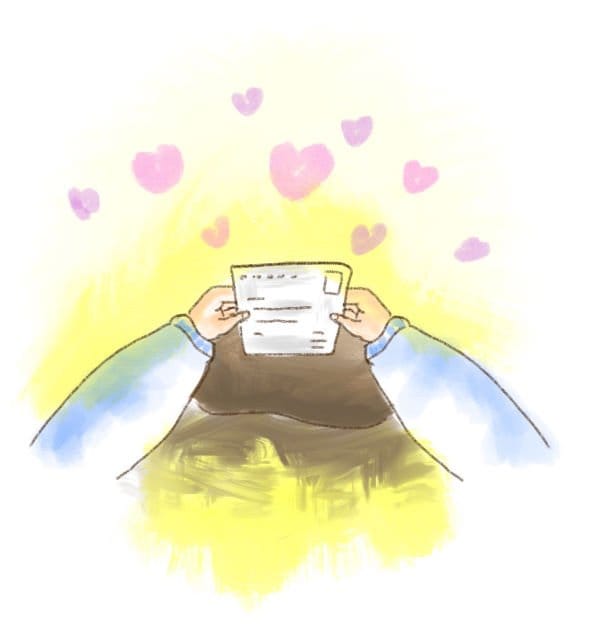
How a letter travels
How is a letter born?
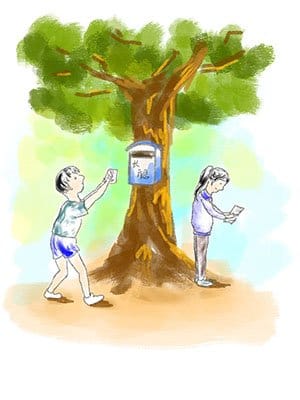
Collect
Every school has a CTSS mailbox, and children post their letters whenever they like. Once a month, we collect them.
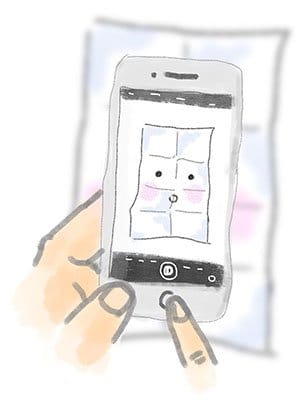
Photograph
Volunteers photograph every detail of every letter and upload it to our own letter system.
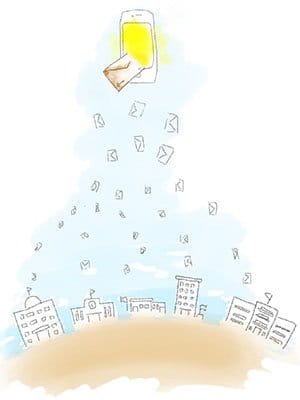
Match
Letters are shared out by set rules. The same child's letters always go to the same volunteer, which helps a steady bond grow.
Reply
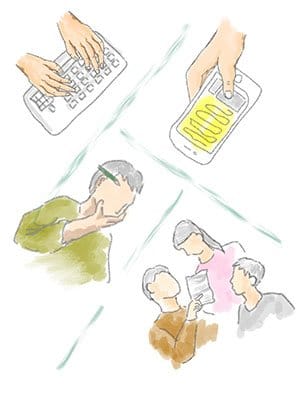
Reply within a week of receiving a letter. Wherever you are, all you need is a computer or smartphone and the internet.
Check
Once you submit, your reply supporter reads it and, where needed, works with you on changes until it's final.
Print and pack
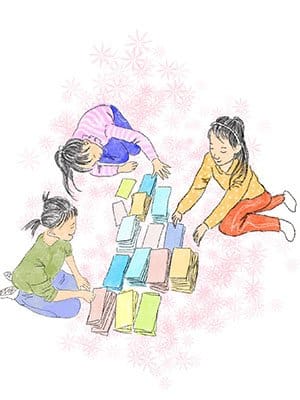
When the month's replies are done, they're printed and packed at an in-person session. Many volunteers bring family and friends.
How we write
Our principles
Listen, empathise, care, keep company, support, guide.
Keep your promise
This is the most basic rule. Children write to CTSS because they're hoping for a reply. We collect letters once a month and share them out to each volunteer on our letter system. Please write your replies within the set time and submit them, so we have time to print and pack them and get them to the children as soon as we can.
Listen, empathise, care, keep company, support, guide
A CTSS volunteer is a friend the children trust. Don't dismiss a child's feelings (“don't cry, it's nothing”). Show that you understand and accept them (“you must have felt really upset after that fight with your classmate”), feel it with them (“I'd have been at a loss too; the same thing happened to me when I was little”), show your care, stay with them through the hard moments, and guide gently when it's needed.
Use words a child understands
The children are between 6 and 12. The youngest may not read or write well yet. Please use friendly, lively words, short sentences and simple stories, and avoid empty stock phrases.
Don't judge, lecture or label
We are equals with the children. Don't judge them as an elder, as someone who has been there, or as a city person (“I don't think that's hard at all”), don't lecture (“you should do this, you shouldn't do that”), and don't label (“you're a good kid”, “that classmate is a bad kid”).
We don't replace their parents
Some of these children are left behind and some are migrant children, but they have parents, and their parents love them, without question. Some parents, held back by their own upbringing, schooling or circumstances, can't keep their children with them, or don't know how to show their love, or what children face as they grow. We aren't here to raise the children in their place. We are friends who keep them company as they grow.
We are not counsellors or teachers
Most of our volunteers are ordinary parents, not counsellors. A letter tells us only so much, and we don't know each child's family or background, so it isn't right to analyse a child or give psychological advice. Nor are we teachers: children write to be heard and seen. If they ask about schoolwork, share your own experience and encourage them, but there's no need to correct their spelling. If you are a qualified counsellor or teacher, please set that role aside when you write, and keep the child company as one person to another.
Keep the letters private
Please don't share anything from your letters with a child, in your own name, anywhere: blogs, social media, WeChat, newspapers, websites or TV. Anything we make public is approved by the project team first. This protects the children's privacy, and the schools' and the project's interests.
Tell us straight away if…
If a letter shows either of the following, please don't reply on your own; contact us straight away. We'll talk with the school and the family as needed, or pass it to professionals.
- A child with serious emotional or behavioural problems (such as severe depression, mania, violence, antisocial behaviour, or thoughts of suicide).
- A child complaining about how the school is run or about a teacher.
You won't be alone
We're one big family, growing together.
“I'd love to be a CTSS volunteer, but I'm not sure I can write a good reply, and I worry I might do a child harm.” We understand, and we admire how seriously you take it. You won't be alone: here you'll get all the support you need.
-
Training
Before you start, you'll join an induction: our core ideas, the rules and the letter system, children's emotional needs and what life is like for rural children, and first ways to approach a reply. Training continues after you start.
-
A reply supporter of your own
A reply supporter is a volunteer's own supporter. Like the children, we all need support and encouragement, especially when it's hard. Every volunteer has one, ready to help with any question as you write.
-
Recommended replies
Our volunteers are full of hidden talent, and some replies are simply wonderful. We share the best with every volunteer.
-
Reply reviews
Which letter is worth learning from? Why does this reply move us so? We regularly talk through real replies together, and a real example makes everything clear.
Questions about volunteering
Is there an age limit?
Yes. For now we only take adult volunteers, 18 and over. But there's no upper limit: our oldest volunteer is 85.
I'm a woman. Can I be a CTSS volunteer?
Of course. Our volunteers are nicknamed “Uncles” (长腿叔叔), but most of our team are women.
How long do I need to commit?
At least one year. Writing to a child is long-term work, and children need a steady connection. Of course, we'd love you to stay, so you can keep a child company whenever they need you.
What do I need?
Ideally a computer. A smartphone works too, though longer replies are harder to write on one.
Do I need a background in psychology?
It helps if you have one, but don't worry if you don't. We believe anyone with kindness in their heart can be a CTSS volunteer for someone, and we'll give you training and support.
I don't have children. Can I still volunteer?
Yes. Even without children, everyone was a child once and has felt what children feel. What matters more is whether you can notice your own feelings and have empathy for others.
How much work is it?
Each CTSS volunteer answers about three letters a month. With thinking time, a reply takes about one to two hours, so with a quiet half-day you can finish a month's letters.
Who owns the copyright of my letters?
All replies belong to the CTSS program, because you're not working alone: we're a team, and every volunteer gets training and support. We promise this copyright is only used for charitable purposes; for anything else, we'll ask for your consent first.
Ready?
Apply to be a CTSS volunteer
Anyone with kindness in their heart can be a CTSS volunteer for someone.
To apply you must be a native Mandarin Chinese speaker, and 18 or older. Our letters are written in Chinese. Tell us a little about yourself and we'll write back by email.